
Key Takeaways
-
Most toothaches in Pico Rivera are caused by tooth decay, and fast treatment at Direct Dental can often save the tooth and stop the pain the same day.
-
Mild sensitivity or small dark spots can signal decay long before severe toothache starts, making treatment quicker, simpler, and more affordable when caught early.
-
Treatments range from fluoride applications and small fillings to dental crowns and root canal therapy—modern techniques at Direct Dental make these procedures far more comfortable than patients expect.
-
Direct Dental in Pico Rivera offers emergency appointments, accepts most insurance plans, and provides bilingual care (English, Spanish, Mandarin) for families in Pico Rivera and surrounding communities.
-
Home remedies like ibuprofen, a cold compress, and saltwater rinses offer only temporary relief; lasting toothache pain relief requires a dentist to remove the decay and infection at its source.

What Is Tooth Decay and Why Does It Cause Toothache?
Tooth decay (also called dental caries) is permanent damage to the tooth structure caused by acids from bacteria feeding on sugars in your mouth. Once this damage begins, your body cannot reverse it on its own—the tooth enamel simply doesn’t regenerate.
Here’s how the tooth decay process works: your mouth naturally contains bacteria that form sticky dental plaque on your teeth throughout the day. When you eat sugary foods or starchy foods, these bacteria feast on the leftover particles and produce acids that attack your enamel. Over time, these acids begin to dissolve the minerals in your tooth surface.
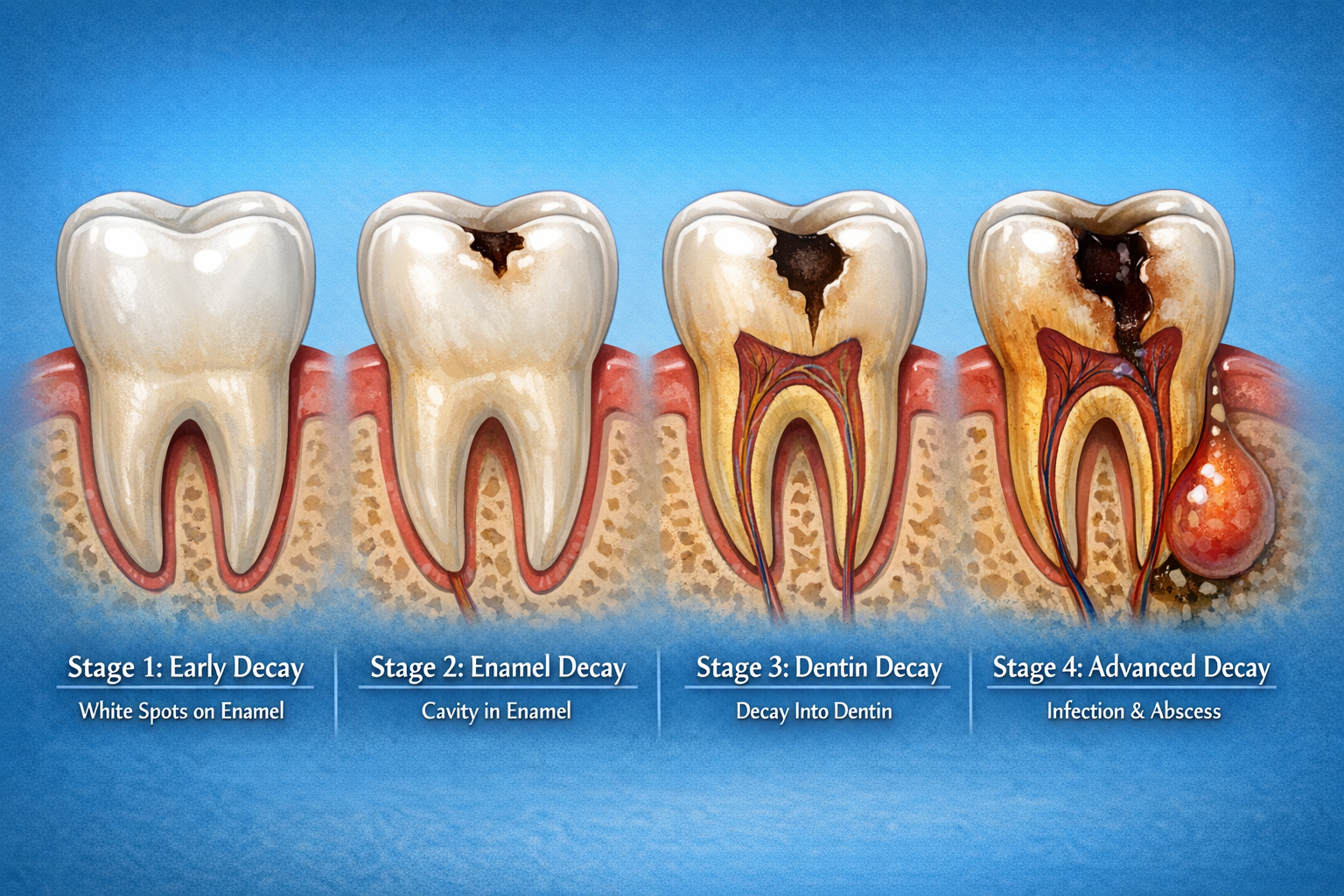
The decay starts on the outer enamel layer, then progresses into the softer dentin beneath. If left untreated, it eventually reaches the nerve (pulp) at the tooth root. Toothache usually begins once decay reaches these deeper layers where blood vessels and nerve tissue live. At that point, pressure and inflammation inside the tooth create the throbbing, radiating pain that often drives patients to call Direct Dental urgently.
In communities like Pico Rivera, common dietary habits—sugary drinks, candies, pan dulce, juice boxes for kids, and frequent snacking—can increase the risk of decay and tooth pain when brushing and daily flossing aren’t consistent. The good news is that understanding this natural process empowers you to prevent toothaches before they start.
Early Signs of Tooth Decay Before a Toothache Starts
Visual warning signs:
-
White chalky spots on the tooth surface (indicating losing minerals)
-
Light brown or dark spots that weren’t there before
-
Tiny pits or roughness on chewing surfaces
-
Visible changes between teeth or along the gum line
Early sensations you might notice:
-
Brief tooth sensitivity to cold drinks or ice cream
-
Sharp twinge when eating sweet foods
-
Sensitivity to air when breathing in through your mouth
-
Discomfort localized to one specific tooth
The tricky part? Early decay often causes no pain at all. Many dental cavity cases are only discovered through dental X-rays or during a professional exam. This is exactly why regular check ups matter—your dentist can spot problems you can’t see or feel.
Parents in Pico Rivera should watch carefully for changes in their children’s teeth, especially white or brown spots appearing on molars. If you notice anything unusual, schedule an exam promptly. The earlier cavities are diagnosed, the simpler the treatment.
What Does Tooth Decay Feel Like When It Becomes a Toothache?
Mild to moderate symptoms: | Symptom | What It Feels Like | |———|——————-| | Cold sensitivity | Sharp pain when drinking cold water or eating ice cream | | Heat sensitivity | Lingering discomfort after hot coffee or soup | | Sweet sensitivity | Zing of pain with candy or soda | | Chewing discomfort | Pain when biting down on one side | | Localized tenderness | One tooth hurts when you tap on it |
Severe symptoms requiring prompt attention:
-
Constant throbbing that doesn’t go away
-
Pain radiating to your jaw, ear, or temple
-
Facial swelling around the cheek or jaw
-
Swelling in the gums near the affected tooth
-
Difficulty with sleep due to persistent mouth pain


Warning signs of infection or abscess:
-
A pimple-like bump on your gum near the painful tooth
-
Bad taste in your mouth that won’t go away
-
Fever accompanying your toothache
-
Bleeding gums or pus around the tooth
-
Trouble breathing or swallowing (seek emergency care immediately)
Even if your toothache fades temporarily, the decay and potential infection remain. The tooth decay process continues silently, and symptoms typically return worse than before if you don’t see a dentist.
How Dentists Diagnose Toothache and Tooth Decay at Direct Dental

Step 1: The initial conversation
Your dentist or team member will ask:
-
When did the pain start?
-
What triggers it—cold, heat, chewing, or nothing specific?
-
Is there any swelling or fever?
-
Have you had any recent trauma to the area?
-
Do you have a history of decay or previous dental work on this tooth?
Step 2: Clinical examination
The dentist performs a careful visual inspection of your teeth and gums, looking for:
-
Visible holes or dark spots indicating decay
-
Soft spots when gently probing the tooth surface
-
Signs of receding gums or gum disease
-
Cracks in the enamel
-
Problems with your bite from high fillings or cracked teeth
Step 3: Digital X-rays
Direct Dental uses low-radiation digital X-rays to see what’s happening beneath the surface. These images reveal:
-
Decay hidden between teeth
-
Cavities forming under old fillings
-
How close decay is to the nerve
-
Bone infection or abscess at the tooth root
-
The overall health of surrounding structures
Toothache Decay Treatment Options
At Direct Dental in Pico Rivera, our goal is always to save your natural tooth whenever reasonably possible while relieving your pain quickly. Modern local anesthesia and updated techniques make these treatments far more comfortable than many patients expect. If you’re anxious about dental work, let us know—we can discuss additional comfort options to help you relax.
Most treatments can be completed in one or two visits. Our team works with your schedule and often offers same-day or next-day appointments for patients experiencing toothache. Here’s what each treatment involves:
Fluoride Treatment and Remineralization for Early Decay
When decay is caught at the earliest stage—before a hole has formed—professional fluoride treatments can actually help reverse the damage. This approach works best for white-spot lesions where the tooth is losing minerals but hasn’t developed a true cavity yet.
What this treatment involves:
-
Professional fluoride application (varnish or gel) applied directly to the affected area
-
Higher concentration than over-the-counter products for enhanced enamel repair
-
Quick, painless application during a regular dental visit
Your dentist may also recommend prescription-strength fluoride toothpaste or rinses for home use. This is particularly helpful for patients who:
- Snack frequently throughout the day
- Experience dry mouth (not producing enough saliva)
- Have a history of frequent cavities
- Wear braces or other orthodontic appliances
Dental Fillings to Repair Cavities and Stop Toothache
Once decay creates a hole in your tooth but hasn’t severely damaged the nerve, a filling is usually the first-line treatment. This is the most common approach for treating moderate tooth decay.
The filling process:
- Numbing the tooth with local anesthesia so you feel comfortable
- Gently removing decayed tissue using precise instruments
- Cleaning the area thoroughly to remove all bacteria
- Placing tooth-colored composite resin filling material matched to your natural shade
- Shaping and polishing the filling for a smooth, comfortable bite
For very large cavities or teeth with cracks, your dentist may recommend a dental crown instead of—or in addition to—a filling. Crowns provide more structural support for teeth that have lost significant natural structure.
Crowns for Severely Decayed or Cracked Teeth
A dental crown is a strong, custom-made cap that covers and protects the entire visible part of a tooth. Crowns become necessary when decay or damage is too extensive for a simple filling to provide adequate strength.
Common reasons you might need a crown:
-
Deep decay that leaves the tooth fragile after treatment
-
Large old fillings that have failed or are cracked
-
Cracks in the tooth causing pain when biting
-
Teeth that have completed root canal therapy
-
Teeth at high risk of fracture due to grinding
The crown process typically involves two visits:
First Visit – What Happens
Shaping the tooth, taking digital or physical impressions, placing a temporary crown
Second Visit – What Happens
Removing the temporary, cementing the permanent crown, adjusting your bite
Direct Dental uses tooth-colored crown materials whenever appropriate to blend seamlessly with your smile while restoring comfortable chewing function. With proper brushing, flossing, and regular checkups, crowns can last many years. The key is preventing new decay at the crown edges where it meets your natural tooth structure.

Root Canal Therapy for Toothache from Nerve Infection
Root canal therapy is designed to relieve toothache, not cause it. This treatment becomes necessary when decay reaches the pulp—the soft tissue inside your tooth containing nerves and blood vessels. Modern anesthesia makes the procedure tolerable for most patients, often no worse than getting a filling.
Signs you may need root canal therapy:
-
Deep decay that has reached the nerve
-
Severe sensitivity to hot or cold that lingers long after the stimulus is removed
-
Spontaneous pain that comes without any trigger
-
Abscess with swelling, pus, or a pimple-like bump on the gum
-
Darkening of the tooth
What happens during a root canal:
- The tooth is completely numbed with local anesthesia
- A small opening is made in the top of the tooth
- Infected nerve tissue is carefully removed from the canals
- The canals are cleaned, disinfected, and shaped
- The empty canals are sealed with biocompatible filling material
- A temporary or permanent restoration is placed
After root canal therapy, most back teeth need a crown to protect them from fracture and restore full chewing function. Root canal treatment at Direct Dental often allows patients in Pico Rivera to keep a tooth that would otherwise need extraction—saving your natural tooth and avoiding the need for implants or bridges.
Tooth Extraction and Replacement When a Tooth Cannot Be Saved
In some cases, extraction becomes the safest option. This typically happens when:
-
Extensive decay has destroyed most of the tooth structure
-
A vertical fracture extends below the gum line
-
Advanced infection has damaged too much bone
-
The tooth cannot be successfully restored
Your dentist at Direct Dental will numb the affected area completely, remove the tooth as gently as possible, and provide detailed aftercare instructions to minimize discomfort and prevent complications like dry socket or infection.
Replacement options after healing:

Home Remedies for Toothache Relief (Short-Term Only)
Over-the-counter pain relief:
-
Ibuprofen (Advil, Motrin) helps reduce inflammation and provides pain relief
-
Acetaminophen (Tylenol) works for patients who cannot take ibuprofen
-
Follow package directions carefully
-
Ask your dentist or physician first if you have other health conditions
Non-medication approaches:
-
Apply a cold compress or bag of frozen veggies wrapped in a towel to your cheek for 10-15 minutes at a time
-
Rinse gently with warm water and salt (1/2 teaspoon salt in 8 ounces of water) to clean the area and reduce inflammation
-
A hydrogen peroxide rinse (equal parts 3% hydrogen peroxide and water) can help kill bacteria—spit it out completely, never swallow
-
Gently floss around the painful tooth to remove any trapped food that might be worsening the discomfort
What to avoid:
- Never place aspirin directly on your gum or tooth—this causes chemical burns to soft tissue
- Use clove oil sparingly if at all; it can irritate tissues when overused
- Don’t ignore symptoms hoping they’ll improve—the underlying issue remains
- Avoid very hot or cold foods and drinks that trigger pain
These remedies provide only temporary relief. If you’re in Pico Rivera and experiencing tooth pain, call Direct Dental for a same-day or next-day exam rather than relying on home treatment indefinitely. Untreated decay can worsen rapidly, leading to more extensive treatment needs and potentially tooth loss.
How to Prevent Toothache from Tooth Decay
Consistent daily care plus regular dental visits represent the most effective—and most affordable—way to prevent tooth decay and avoid painful emergency visits.
Daily home care essentials:
-
Brush your teeth twice daily for two full minutes using fluoride toothpaste
-
Use a soft-bristled brush with gentle circular motions
-
Clean between teeth once daily with floss or interdental cleaners
-
Consider an antibacterial mouthwash for additional plaque buildup control
Smart dietary choices:

Professional preventive services at Direct Dental:
-
Checkups and cleanings every 6 months (or more frequently if advised)
-
Dental sealants for children’s back teeth—these protective coatings prevent 80% of cavities in the first two years
-
Professional fluoride treatments for high-risk patients
-
Early detection of potential problems before they cause pain
Why Choose Direct Dental in Pico Rivera for Toothache and Decay Treatment?
Comprehensive services in one location:
-
Emergency dental care for urgent toothaches
-
Fillings, crowns, and other restorative dentistry
-
Root canal therapy
-
Dental implants
-
Braces and Invisalign
-
Cosmetic dentistry including veneers and teeth whitening
-
Preventive care for the whole family
Practical advantages for Pico Rivera families:
-
Acceptance of most major dental insurance plans
-
Flexible payment arrangements for uninsured patients
-
Low-radiation digital X-rays for safer, more accurate diagnosis
-
Transparent explanations of treatment options and costs before we begin
-
No high-pressure sales tactics—just honest recommendations

Bilingual care you can understand:
Our team provides care in English, Spanish, and Mandarin, making it easier for patients and parents to fully understand diagnoses, treatment steps, and aftercare instructions in their preferred language. We believe informed patients make better decisions about their dental health.
If you’re experiencing a toothache or worried about possible tooth decay, don’t wait for symptoms to get worse. Call Direct Dental in Pico Rivera today or request an appointment online for a prompt evaluation. We’re here to help you get out of pain and back to your life.
